
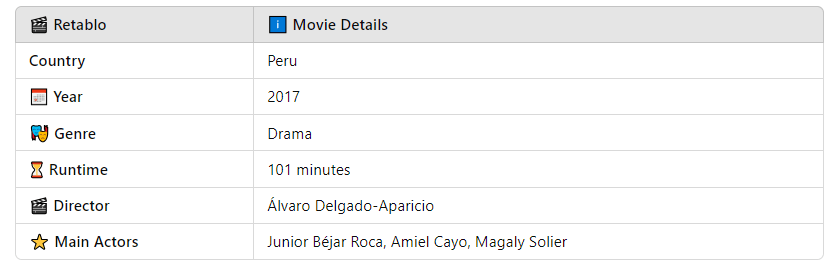
There are films that whisper instead of shout, that trust the stillness of their gaze more than the movement of plot. Retablo is one of those rare works—subtle, intimate, and quietly devastating. Set in a remote Andean village and spoken entirely in Quechua, it invites us into a world where tradition holds people together, but can also quietly unravel them.
The story centers on a boy learning the art of crafting religious retablos—miniature altars that tell sacred stories through figurines and delicate detail. This craft becomes more than heritage; it becomes a metaphor for what is preserved and what is hidden, what is carefully built and what may one day shatter.
The camera lingers on textures: the cracked paint of an old wooden figure, the smoke of a rural kitchen, the uneven light of dusk. Nature is omnipresent—beautiful and indifferent. It is in this harsh, stunning landscape that Retablo unfolds a story not of plot twists, but of emotional thresholds quietly crossed.
There’s an unspoken tension beneath the surface, one that makes every silence feel loaded and every gesture charged. The village is not just a setting, but a presence—watchful, conservative, often unforgiving. Within it, tenderness must disguise itself, and identity is a dangerous thing to explore.
Junior Béjar Roca brings rare depth to the role of Segundo, conveying fear, loyalty, confusion, and love with a restraint that aches. Amiel Cayo, as the father, is equally compelling, a man burdened by secrets that won’t remain buried. Their performances never try to explain too much. That’s what makes them so affecting.
What Retablo does so well is to speak about the unspoken—the things that exist between words, within glances, through silence. It’s a film that trusts the viewer to feel rather than be told, to notice what’s missing and what’s trembling beneath the surface. Without sensationalism or sentimentality, it offers a powerful meditation on family, masculinity, shame, and the quiet resilience of the heart.
In its final moments, the film doesn’t resolve so much as release. And in doing so, it lingers—like a prayer never said aloud, or a story sculpted in clay, held together by fragile threads of love and pain.
