
Diego Luna’s career has unfolded at the intersection of personal storytelling, artistic collaboration, and political consciousness. Emerging from Mexican cinema at a moment of renewed international attention, Luna has consistently navigated between local narratives and global platforms, refusing to reduce his work to either cultural export or mainstream assimilation. His trajectory reflects an artist attentive to context — historical, social, and emotional — rather than to stardom alone.
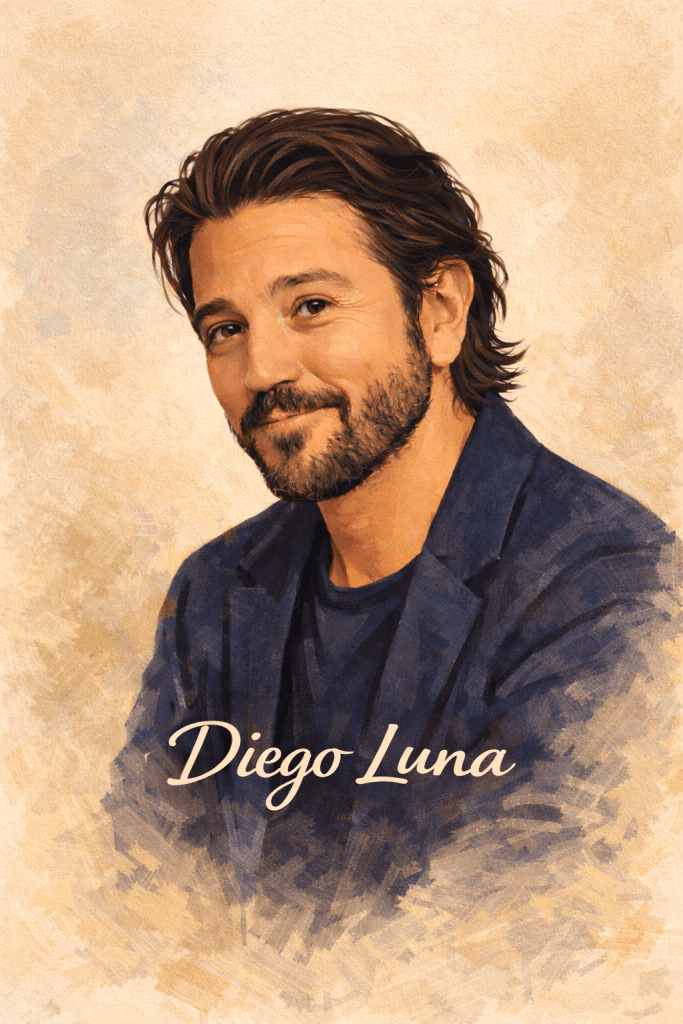
A defining element of Luna’s path is his long-standing personal and creative partnership with Gael García Bernal. Their collaboration, extending from acting to production, has played a central role in shaping contemporary Mexican cinema. Together, they have helped bring locally rooted stories to international stages, while also creating structures that support emerging voices beyond their own careers.
As an actor, Luna gravitates toward roles shaped by ethical tension rather than moral clarity. His performances privilege vulnerability and restraint, allowing doubt and contradiction to remain visible. This approach has been recognized across international festivals and institutions, earning him major accolades including the Silver Bear for Best Actor at the Berlin International Film Festival and multiple Ariel Awards, Mexico’s highest film honors. These recognitions underscore a career built on consistency rather than spectacle.
Luna’s range is also evident in projects that challenge tonal expectation. In Casa de mi padre, where he worked alongside Will Ferrell, he navigated satire and cultural parody without distancing himself from character or context. Even within comedy or genre play, his performances retain a grounded seriousness that resists caricature.
Behind the camera, Luna’s work as a director and producer further clarifies his sensibility. Films such as Abel and Mr. Pig reveal an interest in marginal figures and quiet fractures rather than transformation or resolution. As a producer, he has supported works that have gone on to receive international recognition at major festivals, extending his influence beyond his own presence on screen.
His international visibility has also expanded through globally recognized television series, where his performances retain a sense of interiority despite industrial scale. This balance between intimacy and reach was recently acknowledged with a Golden Globe nomination for Best Actor for his role in Andor, confirming how his screen presence translates beyond cinema into long-form storytelling without losing restraint or political weight.
Parallel to his artistic work, Luna has sustained a visible political engagement, particularly around migration, democracy, and freedom of expression. This commitment is not ancillary to his career; it runs through it. The same attention to power, responsibility, and human consequence that defines his roles also shapes his public presence.
What ultimately defines Diego Luna is coherence rather than versatility. Across acting, directing, producing, and activism, his work reflects a sustained ethical orientation. Awards and recognition mark this path, but they do not define it. His cinema remains rooted in context, collaboration, and an insistence that storytelling cannot be separated from the conditions in which it is made.
