
Few contemporary filmmakers embody the collision between cinema and political power as fully as Jafar Panahi. For more than two decades, his work has existed under conditions of surveillance, censorship, and outright prohibition. And yet, his films have continued to circulate globally, earning some of the most prestigious awards in international cinema while being officially banned in his own country. Panahi’s career is not defined by adversity alone, but by the insistence that filmmaking itself can function as an act of resistance.
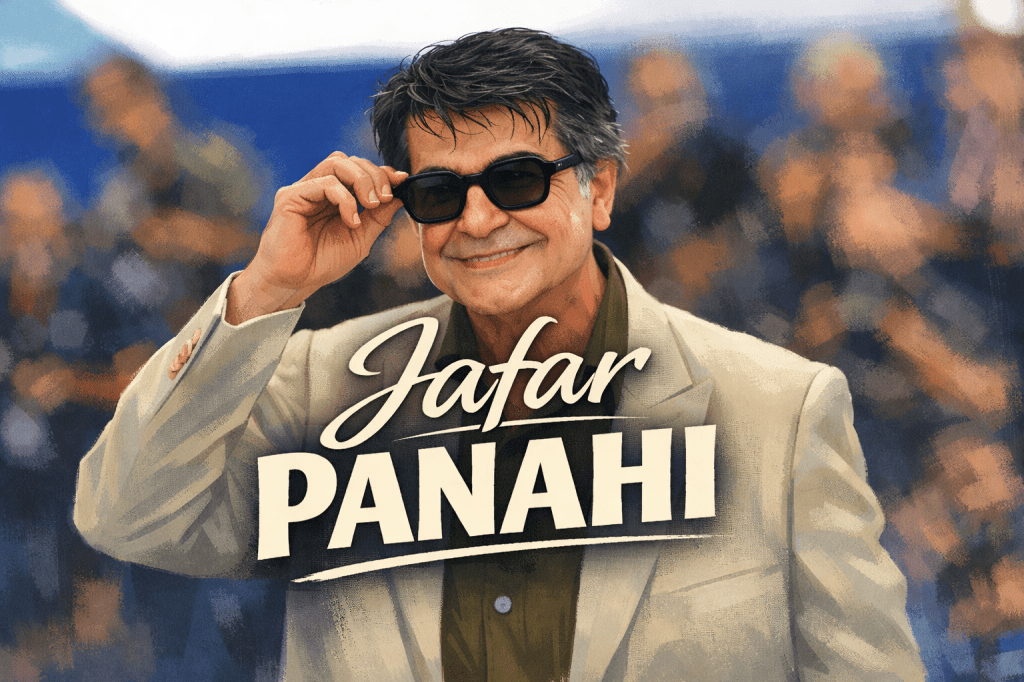
Emerging from the Iranian New Wave and mentored by Abbas Kiarostami, Panahi first gained international recognition with The White Balloon, which won the Caméra d’Or at the Cannes Film Festival in 1995. From the beginning, his cinema was rooted in everyday life — taxi rides, domestic spaces, city streets — yet these seemingly modest settings revealed deep structural inequalities, especially around class, gender, and authority.
As his films became more politically direct, so did the consequences. Works such as The Circle and Crimson Gold openly confronted institutional oppression and social hypocrisy, leading to increasing scrutiny from Iranian authorities. In 2010, Panahi was arrested and later sentenced to a filmmaking ban, house arrest, and restrictions on travel and speech — a punishment that would become central to his artistic method rather than its end.
What followed is one of the most extraordinary chapters in modern film history. Unable to work legally, Panahi continued to make films clandestinely, often starring himself and using minimal resources. This Is Not a Film, smuggled out of Iran on a USB stick, transformed the act of documenting prohibition into cinema itself. Later works such as Taxi, 3 Faces, and No Bears pushed this strategy further, turning limitation into formal invention and exposing how control operates through both visibility and fear.
Despite — or perhaps because of — these conditions, Panahi’s international recognition only intensified. He has won the Golden Lion at Venice (The Circle), the Golden Bear at Berlin (Taxi), and the Best Screenplay Award at Cannes (3 Faces), making him one of the few filmmakers to be awarded at all three major European festivals. These honours are inseparable from the political reality of his work, as festivals repeatedly used their platforms to challenge the legitimacy of the restrictions imposed on him.
His recent film It Was Just an Accident, which won the Palme d’Or at the Cannes Film Festival and went on to be nominated for Best International Feature Film at the Academy Awards, confirms that Panahi’s cinema has lost none of its urgency or relevance. The film continues his exploration of moral responsibility, revenge, and the long shadows cast by repression, reinforcing how personal encounters can reveal systemic violence.
What defines Jafar Panahi’s work is not defiance for its own sake, but clarity. His films rarely rely on symbolism or allegory; instead, they insist on proximity — to bodies, conversations, and the small negotiations of everyday life. Authority is not abstract in his cinema; it is present in gestures, rules, and silences. By refusing spectacle, Panahi exposes power at its most ordinary and therefore most dangerous.
In an era when political cinema is often diluted by distance or metaphor, Panahi’s work remains stubbornly direct. His films remind us that cinema does not require permission to exist — only attention. And in continuing to film under prohibition, Jafar Panahi has transformed constraint into one of the most powerful creative positions in contemporary cinema.
