
Few major European film festivals are as closely connected to their city as the San Sebastián International Film Festival. For nine days every September, cinema seems to take over Donostia: from the Kursaal and the Victoria Eugenia to screenings across the city, established filmmakers, emerging directors and audiences come together in one of the most important meeting points between European, Latin American and international cinema.
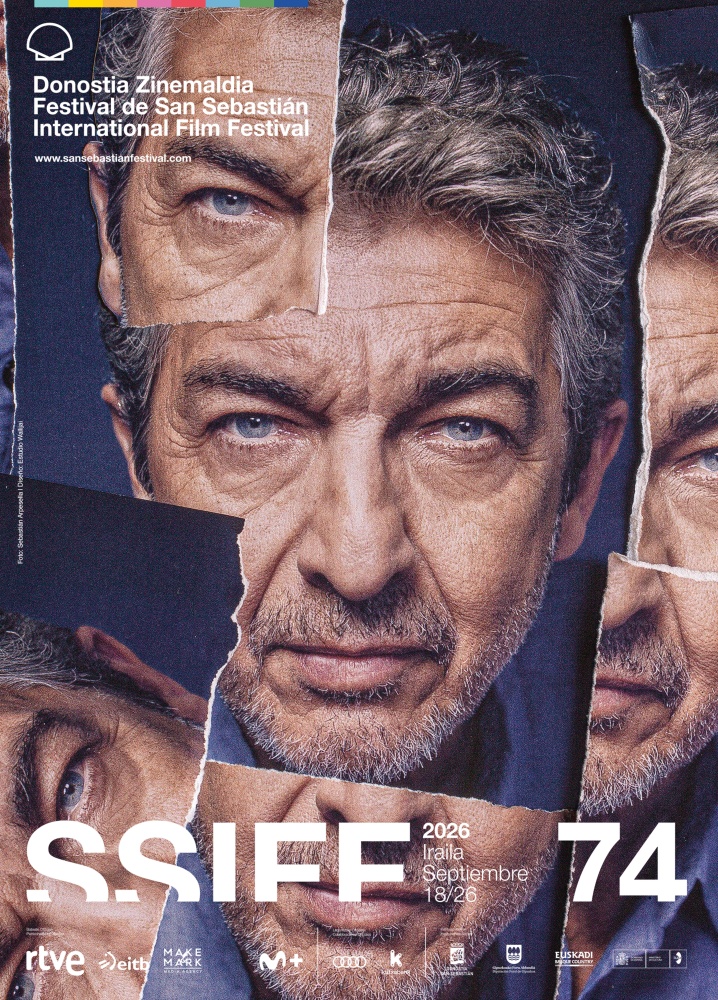
The 74th edition, held from 18 to 26 September 2026, was particularly extensive. The festival screened 263 films from 47 countries, combining the Official Selection with sections such as New Directors, Horizontes Latinos, Zabaltegi-Tabakalera, Perlak and Made in Spain. This year also brought two particularly notable Donostia Award recipients — Werner Herzog and Naomi Watts — while Argentine actor Ricardo Darín, himself a Donostia Award winner in 2017, was chosen as the face of the official poster.
But when the awards were announced, one filmmaker stood above the rest: Mike Leigh.
The British director won the Golden Shell for Best Film for Tender Loving Care, adding San Sebastián’s highest honour to a career stretching back more than five decades. Leigh also received the Jury Prize for Best Screenplay, while Kate O’Flynn shared the Silver Shell for Best Leading Performance for her work in the film.
It was an unusually comprehensive victory for Tender Loving Care, but the Official Selection produced a geographically diverse group of winners.
The Special Jury Prize went to Border (Bian jing), directed by Ah Biao, a Hong Kong-US-South Korean production. Meanwhile, Swedish filmmaker Amanda Kernell received the Silver Shell for Best Director for Brace Your Heart (Garrat du váimmu), continuing the international career she began with films such as Sami Blood.
The acting prizes were particularly interesting this year. Kate O’Flynn shared the Silver Shell for Best Leading Performance with Swedish actress Asta Kamma August, recognised for Growth of the Soil (Markens grøde). That film also earned Oskar Dahlsbakken the Jury Prize for Best Cinematography.
Spanish actor Javier Cámara, meanwhile, received the Silver Shell for Best Supporting Performance for 5 More Minutes (5 minutos más).
Main Awards – San Sebastián 2026
| Award | Winner |
|---|---|
| Golden Shell – Best Film | Tender Loving Care – Mike Leigh |
| Special Jury Prize | Border – Ah Biao |
| Silver Shell – Best Director | Amanda Kernell – Brace Your Heart |
| Silver Shell – Best Leading Performance | Kate O’Flynn – Tender Loving Care |
| Silver Shell – Best Leading Performance | Asta Kamma August – Growth of the Soil |
| Silver Shell – Best Supporting Performance | Javier Cámara – 5 More Minutes |
| Jury Prize – Best Cinematography | Oskar Dahlsbakken – Growth of the Soil |
| Jury Prize – Best Screenplay | Mike Leigh – Tender Loving Care |
As important as the Official Selection is, San Sebastián has always been especially interesting for the films discovered outside its principal competition. New Directors, dedicated to first and second features, brought together fourteen filmmakers from countries including Iran, Japan, Kazakhstan, Mexico, South Korea, Taiwan and Ukraine.
The Kutxabank-New Directors Award eventually went to German filmmaker Naëmi Ada for Body of Glass, with South Korean director Yoon Dan-bi’s The World Before receiving a Special Mention.
Latin American cinema once again occupied a prominent position through Horizontes Latinos, one of the sections that gives San Sebastián such a distinctive identity among Europe’s major festivals. The Horizontes Make & Mark Award went to The Illusion of an Everlasting Summer (La ilusión de un verano sin fin), directed by photographer and filmmaker Alessandra Sanguinetti. The Argentine-US documentary follows two cousins over a period of 25 years, transforming their relationship into a much broader reflection on time, memory and growing older.
The film became one of the edition’s major discoveries, also winning the DAMA Youth Award. Mexican director Fernando Eimbcke, meanwhile, received a Special Mention in Horizontes for Flies (Moscas).
For viewers interested in the more adventurous side of contemporary cinema, Zabaltegi-Tabakalera remains perhaps the festival’s most unpredictable section. This year its main prize went to American filmmaker Jane Schoenbrun for Teenage Sex and Death at Camp Miasma, while Argentine director María Aparicio received a Special Mention for Sometimes Sadness, Sometimes Rebellion.
The audience, however, chose a film that had already generated considerable attention elsewhere in 2026.
Javier Calvo and Javier Ambrossi’s La bola negra won the City of Donostia / San Sebastián Audience Award in the Perlak section. The Spanish-French production arrived in San Sebastián after Calvo and Ambrossi had shared the Best Director prize at Cannes with Paweł Pawlikowski. The film had also recently won the People’s Choice Award at the Toronto International Film Festival, making it one of the year’s most conspicuous examples of a film connecting strongly with festival audiences.
The Audience Award for Best European Film went to NAZA, directed by Yuval Abraham and Rachel Szor, following its Special Jury Prize at Venice.
Those results also illustrate one of the pleasures of following several festivals throughout the year. Films do not exist within isolated events. By September, titles first seen at Sundance, Berlin, Cannes, Venice and Toronto begin meeting again in San Sebastián, sometimes arriving with substantial reputations and sometimes finding entirely new audiences.
At the same time, the festival continues to offer a platform for cinema connected specifically to the Basque Country. The Irizar Basque Film Award went to Elsa Oliarj-Inès for Txakun txakür, while veteran Basque actor Jose Ramon Soroiz received the Zinemira Award in recognition of his career.
Another of the festival’s defining traditions is the Donostia Award, which has honoured major figures in international cinema since Gregory Peck became its first recipient in 1986.
This year’s first recipient, Werner Herzog, received the award during the opening gala. The German filmmaker described himself as feeling part of the Basque community and accepted the honour from what he called “a people of poetry”. Naomi Watts was the edition’s other Donostia Award recipient. San Sebastian Film Festival
The opening ceremony also saw Paul Thomas Anderson’s One Battle After Another receive the FIPRESCI Grand Prix for Best Film of the Year, following a vote involving 591 critics from 69 countries.
By the end of nine days, however, the central image of the 2026 San Sebastián International Film Festival belonged to Mike Leigh.
There is something fitting about seeing a filmmaker with such a long career winning the Golden Shell at a festival that simultaneously devotes so much attention to directors making their first or second films. Tender Loving Care may have dominated the main awards, but elsewhere Naëmi Ada, Alessandra Sanguinetti, Ah Biao, Jane Schoenbrun and Yoon Dan-bi represented very different directions in contemporary cinema.
That balance remains one of San Sebastián’s greatest strengths. It can welcome internationally established figures such as Mike Leigh, Werner Herzog and Naomi Watts while giving significant space to films from China, Argentina, South Korea, Mexico or the Basque Country that may still be largely unknown to international audiences.
For Other Kind of Movies, that makes San Sebastián particularly worth following. The Golden Shell inevitably attracts the headlines, but—as so often happens at a great film festival—the films we will still be talking about several years from now may be hiding somewhere else in the programme.
