
Every autumn, Tokyo becomes a meeting point for filmmakers, critics and audiences eager to discover some of the most interesting productions in contemporary world cinema. In a country with one of the richest cinematic traditions, the Tokyo International Film Festival has established itself as an important platform for both internationally recognised directors and emerging filmmakers.
Founded in 1985, the festival has gradually expanded its international reach while maintaining a particular commitment to Asian cinema. Its programme combines major international productions with independent films, experimental works and stories from countries whose cinematic industries often struggle to achieve global visibility.
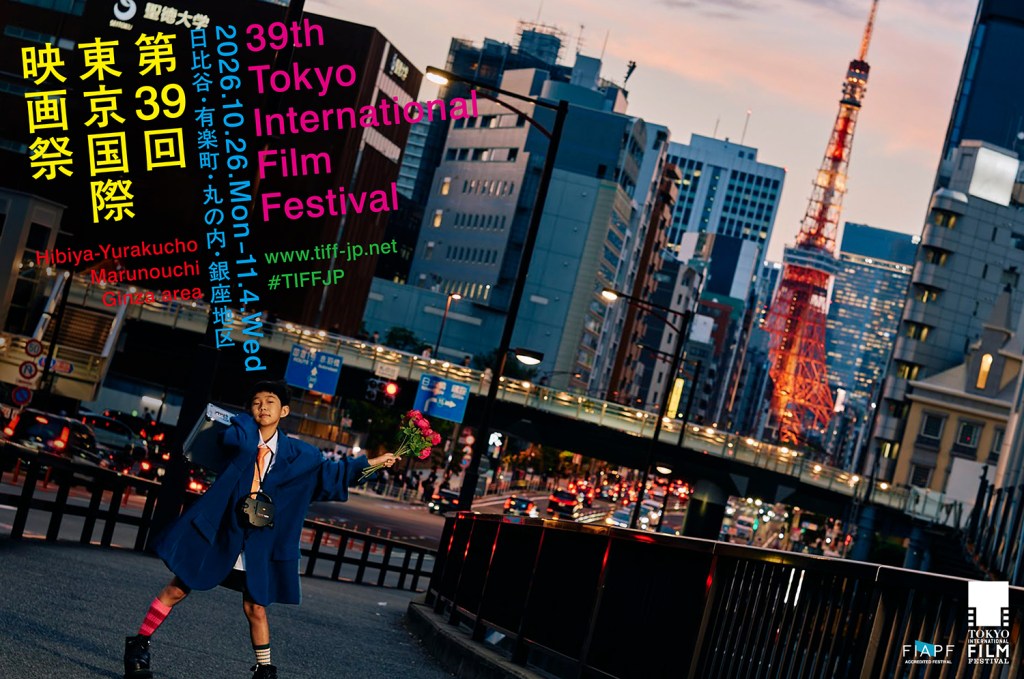
The 39th edition, held from 26 October to 4 November 2026, brought together 204 films across ten days of screenings and special events in the Hibiya, Yurakucho, Marunouchi and Ginza districts.
The festival attracted 69,072 cinema admissions, alongside another 89,269 attendees at related events, demonstrating the continuing enthusiasm for international cinema in the Japanese capital.
This year’s edition was particularly notable for its diverse international competition, with Milcho Manchevski’s Sister Brother Manhole Cover receiving the Tokyo Grand Prix, while filmmakers from Singapore, Argentina, Afghanistan, Indonesia and Japan also attracted attention.
Sister Brother Manhole Cover Wins the Tokyo Grand Prix
The festival’s highest honour, the Tokyo Grand Prix – The Governor of Tokyo Award, went to Sister Brother Manhole Cover, directed by North Macedonian filmmaker Milcho Manchevski.
The film, an international co-production involving North Macedonia, Bulgaria, Serbia, Albania, Italy and the United Kingdom, combines elements of drama, tragedy and dark humour to examine family relationships and social inequality.
Manchevski has developed a distinctive career exploring the relationship between individual lives and wider political or historical circumstances.
His internationally acclaimed debut, Before the Rain (1994), received the Golden Lion at the Venice International Film Festival and an Academy Award nomination for Best Foreign Language Film.
More than three decades later, his recognition in Tokyo demonstrated the continuing relevance of his filmmaking.
The international competition jury was chaired by Australian filmmaker Rolf de Heer, whose work includes The Tracker, Ten Canoes and The Survival of Kindness.
The jury praised Sister Brother Manhole Cover for its combination of different emotional registers and its compassionate treatment of characters confronting difficult circumstances.
The Tokyo Grand Prix also carries a financial award of three million Japanese yen, providing additional recognition for productions that may face challenges securing international distribution.
Manchevski was unable to attend the closing ceremony, but his film’s cast and production team accepted the award on his behalf.
Its victory reflected the festival’s willingness to recognise unconventional storytelling rather than relying exclusively on established cinematic formulas.
Main Awards – Tokyo International Film Festival 2026
| Award | Winner |
|---|---|
| Tokyo Grand Prix – Best Film | Sister Brother Manhole Cover – Milcho Manchevski |
| Special Jury Prize | Magic Atlas – Sun Xun |
| Best Director | Lisandro Alonso – Double Freedom |
| Best Actress | Hu Ling – The Night That Binds Us |
| Best Actor | Narita Ryo – Two Cigarettes, Three Nights |
| Best Artistic Contribution | Until the Day Ends – Jelena Maksimović |
| Audience Award | Heysel 85 – Teodora Ana Mihai |
| Asian Future – Best Film | Serife Tavsan – Tareq Daoud |
| Asian Future – Special Mention | Jani Be Good – Ariani Darmawan |
| Nippon Cinema Now – Best Film | silver express – Tanaka Miki |
| Nippon Cinema Now – Special Jury Prize | Between Us – Matsumura Shingo |
| Asian Students’ Film Conference – Grand Prix | Running Wild in the Sun – Nguyen Vu Hien Chi |
| Asian Students’ Film Conference – Special Jury Prizes | Everything’s Peachy – Nah Yee Chern / All of Her – Kim Nam-hyeon |
| TIFF Ethical Film Award | I Rarely Wake Up Dreaming – Isabelle Stever |
| Kurosawa Akira Award | O Mipo / Mohammad Rasoulof |
Magic Atlas and the Possibilities of Animation
One of the most interesting results of the international competition was the Special Jury Prize awarded to Magic Atlas, directed by Chinese artist and filmmaker Sun Xun.
The Singaporean production combines animation with mythology, history and fantasy, exploring the relationship between imagination and the ways societies construct their understanding of the past.
Sun Xun spent approximately ten years developing the film, an unusually long creative process that reflects the complexity of its artistic approach.
The director has established an international reputation through animated works and installations that frequently examine political history, collective memory and the relationship between reality and representation.
His films often employ traditional artistic techniques, creating elaborate visual worlds that challenge conventional distinctions between cinema and contemporary art.
The recognition of Magic Atlas was particularly significant because it became the first animated production to receive the Special Jury Prize in Tokyo’s main competition.
The award demonstrated the festival’s willingness to recognise animation as a cinematic language capable of addressing complex artistic and philosophical questions.
Animation remains frequently associated with entertainment aimed at younger audiences, despite the extraordinary range of approaches developed by filmmakers around the world.
Works such as Magic Atlas challenge that perception, using the medium to explore subjects that might be difficult to represent through conventional live-action filmmaking.
Its success also reinforced the growing international visibility of independent Asian animation.
Lisandro Alonso Wins Best Director
The Best Director Award went to Argentine filmmaker Lisandro Alonso for Double Freedom, an international co-production involving Chile, Argentina, Luxembourg, Germany and the United Kingdom.
Alonso has developed one of the most distinctive careers in contemporary Latin American cinema.
His films, including La Libertad, Los Muertos, Liverpool and Jauja, are characterised by their patient observation, minimal dialogue and interest in individuals navigating isolated or unfamiliar environments.
Rather than relying on conventional dramatic structures, Alonso frequently constructs narratives through movement, landscape and the passage of time.
His approach invites viewers to pay attention to details that might be overlooked in more traditional storytelling.
The Tokyo jury recognised Double Freedom for its restrained cinematic language and its precise treatment of time.
The award was particularly appropriate for a filmmaker whose work has consistently challenged expectations about narrative rhythm and cinematic experience.
Alonso’s recognition also highlighted the festival’s interest in filmmakers who explore the possibilities of cinema beyond conventional commercial structures.
For audiences unfamiliar with his work, Double Freedom offered an opportunity to discover a director whose influence extends well beyond Latin America.
Japanese Cinema – Narita Ryo and Nippon Cinema Now
Japanese filmmaking occupied an important place in the 2026 edition, both through the international competition and the festival’s dedicated national programme.
The Best Actor Award went to Narita Ryo for his performance in Two Cigarettes, Three Nights, directed by Mishima Yukiko.
Narita has developed a career across Japanese cinema and television, frequently portraying characters whose outward behaviour conceals emotional complexity.
His recognition in Tokyo highlighted the strength of contemporary Japanese acting and the continuing importance of character-driven filmmaking.
The festival also introduced competitive awards within its Nippon Cinema Now section, dedicated to contemporary Japanese productions.
The Best Film Award went to silver express, directed by Tanaka Miki.
The jury selected the film unanimously from a programme of eight productions chosen from more than 150 submissions.
The Special Jury Prize went to Between Us, directed by Matsumura Shingo.
These awards represented an important development for a section designed to introduce audiences and international industry professionals to new directions in Japanese filmmaking.
Japan possesses an extraordinary cinematic heritage, shaped by filmmakers such as Akira Kurosawa, Yasujirō Ozu, Kenji Mizoguchi and Mikio Naruse.
Yet contemporary Japanese cinema extends far beyond the influence of these internationally celebrated directors.
Independent filmmakers continue to explore changing family structures, social isolation, economic uncertainty and the contradictions of modern urban life.
By recognising productions within Nippon Cinema Now, the festival contributes to the international visibility of filmmakers whose work might otherwise remain largely confined to the domestic market.
Asian Future – Discovering Emerging Filmmakers
One of the festival’s most important sections is Asian Future, which provides a platform for emerging directors from across Asia and neighbouring regions.
The Best Film Award went to Serife Tavsan, directed by Tareq Daoud, a Swiss-Turkish production.
The film explores the experiences of a protagonist confronting prejudice and oppression while attempting to rebuild connections with others.
The jury highlighted its treatment of resilience and the emotional challenges faced by individuals seeking acceptance within difficult social environments.
For Daoud, the recognition represented an important early achievement in his filmmaking career.
The section’s Special Mention went to Jani Be Good, directed by Indonesian filmmaker Ariani Darmawan.
The recognition of an Indonesian production was particularly welcome in a region where independent filmmakers frequently face challenges related to financing and international distribution.
Indonesia has experienced significant growth in its film industry, yet much of its international visibility continues to be associated with commercial genre productions.
Independent filmmakers offer a broader perspective on Indonesian society, exploring personal relationships, regional identities and contemporary social transformations.
The Asian Future competition provides an important opportunity for these voices to reach audiences beyond their national borders.
Its combination of emerging filmmakers and international juries also creates possibilities for professional connections that can influence the development of future projects.
Heysel 85 Wins the Audience Award
The Audience Award went to Heysel 85, directed by Romanian-Belgian filmmaker Teodora Ana Mihai.
The Belgian, Dutch and German co-production examines the tragic events surrounding the 1985 European Cup Final at Brussels’ Heysel Stadium, when violence and a stadium disaster resulted in the deaths of 39 people.
The film approaches this historical event through a dramatic narrative, examining the human consequences of a tragedy that remains deeply embedded in European football history.
Mihai has developed a filmmaking career characterised by her interest in social inequality, political circumstances and the experiences of individuals confronting institutions or systems beyond their control.
Her previous feature, La Civil (2021), explored the experiences of a Mexican mother searching for her kidnapped daughter, receiving the Courage Prize in the Un Certain Regard section at Cannes.
With Heysel 85, Mihai returns to a story in which individual lives are profoundly affected by larger social and institutional failures.
The film’s Audience Award demonstrated its ability to connect with viewers despite its difficult historical subject.
Unlike jury prizes, which reflect the perspectives of a small group of filmmakers and industry professionals, audience awards provide an indication of how productions resonate with festivalgoers.
The recognition of Heysel 85 suggested that its examination of collective tragedy and human responsibility had made a particularly strong impression on Tokyo audiences.
Kurosawa Akira Awards – O Mipo and Mohammad Rasoulof
The festival also celebrated two filmmakers whose careers demonstrate the diversity of contemporary Asian and international cinema.
The Kurosawa Akira Award, named after one of Japan’s most influential directors, was presented to O Mipo and Mohammad Rasoulof.
Japanese filmmaker O Mipo has developed a distinctive career exploring social exclusion, personal relationships and the experiences of people living outside conventional social expectations.
Her films frequently combine intimate character studies with broader reflections on contemporary Japanese society.
Iranian director Mohammad Rasoulof has become internationally recognised for his uncompromising examination of political repression and authoritarianism.
His films include Manuscripts Don’t Burn, A Man of Integrity, There Is No Evil and The Seed of the Sacred Fig.
Rasoulof’s filmmaking career has been profoundly affected by political persecution in Iran, where his work has repeatedly challenged the restrictions imposed on artistic expression.
There Is No Evil received the Golden Bear at the 2020 Berlin International Film Festival, while The Seed of the Sacred Fig won the Special Jury Prize at Cannes in 2024.
Recognising O Mipo and Rasoulof within the same edition reflected the festival’s commitment to filmmakers whose work combines artistic ambition with a profound interest in human experience.
The awards also demonstrated the continuing influence of Akira Kurosawa, whose films helped establish Japanese cinema as an essential part of international film culture.
Supporting the Next Generation of Asian Filmmakers
Beyond its principal competitions, the 2026 edition continued its commitment to emerging filmmakers through the Asian Students’ Film Conference.
The section’s Grand Prix went to Running Wild in the Sun, directed by Vietnamese filmmaker Nguyen Vu Hien Chi.
The jury praised the film’s cinematic vision and emotional authenticity, highlighting the quality of its storytelling and execution.
The Special Jury Prizes were shared by Everything’s Peachy, directed by Singaporean filmmaker Nah Yee Chern, and All of Her, directed by South Korean filmmaker Kim Nam-hyeon.
These awards provided recognition for filmmakers at the beginning of their careers, offering opportunities to establish professional connections and attract attention from international audiences.
The festival also presented the TIFF Ethical Film Award to I Rarely Wake Up Dreaming, directed by Isabelle Stever.
The German-Ukrainian production received recognition through an initiative designed to encourage reflection on ethical questions and the social responsibilities of cinema.
Together, these programmes demonstrated the festival’s interest in supporting filmmaking across different stages of artistic development.
For emerging directors, participation in a major international festival can provide access to audiences, critics and industry professionals who might otherwise be difficult to reach.
From the Red Carpet to the Future of the Festival
The 2026 edition included numerous special events, masterclasses and conversations with international filmmakers.
Among the participants were Wayne Wang and Tsukamoto Shinya, two directors whose careers represent very different approaches to contemporary Asian filmmaking.
Wang, whose work includes Chan Is Missing, The Joy Luck Club and Smoke, has frequently explored cultural identity, migration and the experiences of Asian communities.
Tsukamoto, internationally recognised for Tetsuo: The Iron Man, has developed a distinctive cinematic language through films combining physical transformation, psychological intensity and experimental visual techniques.
Their participation provided opportunities for audiences and emerging filmmakers to engage with artists whose careers have challenged conventional expectations.
The festival concluded with a screening of Colony, directed by South Korean filmmaker Yeon Sang-ho.
Yeon has achieved international recognition through productions such as Train to Busan and Peninsula, combining genre filmmaking with reflections on social behaviour and collective fear.
His presence at the closing ceremony demonstrated the festival’s willingness to celebrate popular genre cinema alongside independent and experimental productions.
The 39th edition also served as a prelude to an important milestone: the festival’s 40th anniversary in 2027.
Festival director Hisamatsu Takeo expressed his ambition to make the anniversary edition an even more diverse and internationally significant celebration of cinema.
A Festival Connecting Asia with the World
The 39th Tokyo International Film Festival demonstrated the importance of maintaining spaces where filmmakers from different cinematic traditions can encounter one another.
The Tokyo Grand Prix awarded to Sister Brother Manhole Cover celebrated a European filmmaker whose work combines personal stories with broader social questions.
The recognition of Magic Atlas highlighted the possibilities of experimental animation, while Lisandro Alonso’s Best Director award celebrated a filmmaker whose unconventional approach continues to challenge narrative expectations.
The Asian Future and Nippon Cinema Now sections brought attention to emerging filmmakers, while the awards presented to O Mipo and Mohammad Rasoulof recognised established directors whose work has contributed significantly to contemporary cinema.
Perhaps the festival’s greatest strength lies in its ability to bring together these different generations and approaches within the same programme.
In a film industry increasingly shaped by global commercial franchises, international festivals remain essential spaces for discovering productions that offer alternative perspectives on the world.
The Tokyo International Film Festival reminds us that cinema’s greatest richness comes from the extraordinary diversity of stories, cultures and artistic visions that filmmakers bring to the screen.
And as Tokyo prepares to celebrate its 40th edition in 2027, the festival continues to demonstrate why it remains one of Asia’s most important meeting points for international cinema.
For the complete programme and official award winners, visit the Tokyo International Film Festival website.
