
Every autumn, Vienna becomes one of Europe’s most fascinating destinations for cinephiles. While the Austrian capital is internationally celebrated for its classical music, architecture and artistic heritage, it also hosts a film festival whose identity has remained remarkably distinctive within the international cinematic landscape.
The Viennale – Vienna International Film Festival has established itself as a meeting point for filmmakers and audiences interested in cinema that challenges established conventions. Its programme brings together internationally acclaimed directors, experimental works, documentaries, restored classics and productions from countries whose cinematic traditions rarely receive widespread commercial exposure.
Unlike festivals built around prestigious international competitions, the Viennale places particular emphasis on discovery, artistic freedom and the experience of watching films.
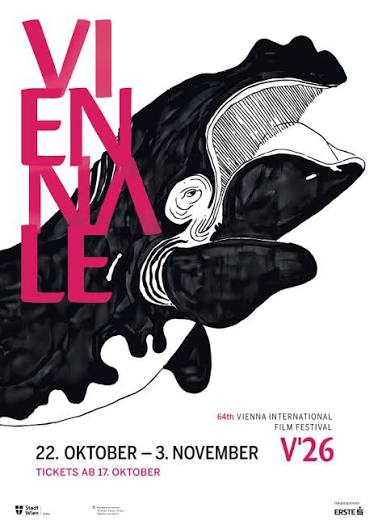
The 64th edition, held from 22 October to 3 November 2026, continued that tradition under the artistic direction of Eva Sangiorgi.
With 78,800 tickets sold and 112 of its 330 public screenings selling out, the festival demonstrated the remarkable enthusiasm of Viennese audiences for independent and international cinema.
This year’s edition was especially notable for its celebration of Austrian filmmaking, its recognition of emerging African directors and its commitment to preserving cinematic history.
Everytime Wins the Vienna Film Award
The festival’s principal award dedicated to Austrian filmmaking, the Vienna Film Award for Best Austrian Film, went to Everytime, directed by Sandra Wollner.
The Austrian-German production explores grief, loss and the ways in which people attempt to continue their lives after experiences that fundamentally alter their understanding of the world.
Wollner approaches these themes through a distinctive combination of psychological realism and elements that challenge conventional perceptions of time and reality.
The film’s recognition was particularly significant for a filmmaker who has developed a reputation for exploring uncomfortable emotional and ethical questions.
Her previous feature, The Trouble with Being Born (2020), examined artificial intelligence, memory and human relationships through a disturbing science-fiction premise, receiving the Special Jury Prize in the Encounters section of the Berlin International Film Festival.
With Everytime, Wollner continues her interest in the boundaries between emotional experience and cinematic representation.
The jury praised the film’s treatment of mourning, particularly its refusal to reduce grief to predictable emotional responses.
Its approach to loss, memory and the persistence of everyday life made it one of the most distinctive Austrian productions recognised at the 2026 festival.
The Special Jury Award went to Militantropos, directed by Alina Gorlova, Yelizaveta Smith and Simon Mozgovyi.
Filmed over more than two and a half years, the documentary examines everyday life in Ukraine during the ongoing war.
Its strength lies in its attention to the experiences of ordinary people living under extraordinary circumstances.
The filmmakers explore the coexistence of violence, uncertainty, resilience and moments of unexpected beauty, resisting the tendency to reduce war to dramatic images or simplified political narratives.
The recognition of Militantropos highlighted the festival’s commitment to documentaries that examine contemporary realities through personal experiences.
Together, these two awards reflected different approaches to the same fundamental question: how do individuals continue living when the world around them has been transformed by loss?
Main Awards – Viennale 2026
| Award | Winner |
|---|---|
| Vienna Film Award – Best Austrian Film | Everytime – Sandra Wollner |
| Vienna Film Award – Special Jury Award | Militantropos – Alina Gorlova, Yelizaveta Smith and Simon Mozgovyi |
| FIPRESCI Prize – International Film Critics | Ben’Imana – Marie-Clémentine Dusabejambo |
| DER STANDARD Readers’ Jury Award | Übergang – Peter Badel and Chris Wright |
| DER STANDARD – Special Mention | Holy Wood Dust – Victor Kossakovsky |
| Erste Bank Film Award | Forever…Forever – Johann Lurf |
Unlike many major European festivals, the Viennale does not present a conventional international Best Film award. Its prizes are organised through independent juries and institutions, reflecting its emphasis on cinematic discovery rather than competition.
Ben’Imana – A Rwandan Story of Memory and Reconciliation
One of the most important recognitions of the 2026 edition was the FIPRESCI Prize, awarded by the International Federation of Film Critics to Ben’Imana, directed by Marie-Clémentine Dusabejambo.
The film takes place in Rwanda in 2012, nearly two decades after the genocide against the Tutsi.
Through the experiences of three generations of women, Dusabejambo explores the complicated relationship between collective memory, family relationships, forgiveness and the possibility of reconciliation.
The film examines a society attempting to confront an extraordinarily painful history while continuing to negotiate the consequences of violence within everyday life.
Its central concern is not simply whether forgiveness is possible, but what forgiveness means when it becomes a public expectation imposed upon individuals whose personal experiences remain deeply traumatic.
Dusabejambo approaches these questions through intimate relationships, allowing the emotional complexities of her characters to emerge without reducing them to straightforward representations of victimhood or reconciliation.
The FIPRESCI jury highlighted the film’s sensitivity, its attention to unspoken emotions and its ability to explore the contradictions of contemporary Rwandan society.
The award was particularly meaningful for a debut feature emerging from a national cinema that continues to develop its international visibility.
Rwandan filmmaking has increasingly attracted attention through productions examining the country’s history and contemporary identity, yet opportunities for international distribution remain limited.
The recognition of Ben’Imana at the Viennale therefore represented more than an individual artistic achievement.
It also demonstrated the importance of festivals that provide space for filmmakers working outside the world’s most established production industries.
Through its focus on memory, generational differences and the difficulties of reconciliation, Ben’Imana offered one of the festival’s most compelling examples of cinema’s ability to explore historical trauma through personal experiences.
Forever…Forever – An Unconventional Opening Film
The 2026 Viennale made an unusually bold decision for its opening ceremony.
Instead of presenting a highly anticipated international feature or a star-driven production, the festival opened with Forever…Forever, a 21-minute experimental film by Austrian director Johann Lurf.
Screened in 70mm at the Gartenbaukino, the film marked the first time in the festival’s history that an experimental short had been selected to open the event.
Lurf’s work examines the passage of time through images of a reservoir in Austria’s Waldviertel region.
Using a specially developed analogue film format, the director recorded changing landscapes, light and seasonal transformations over an extended period.
The resulting images challenge conventional perceptions of cinematic duration, transforming an apparently simple landscape into an exploration of time, movement and the physical possibilities of film.
The choice reflected an important aspect of the Viennale’s identity.
At a time when film festivals frequently rely on celebrities and internationally recognisable titles to attract attention, opening with an experimental short represented a deliberate celebration of cinema as an artistic medium.
The film subsequently received the Erste Bank Film Award, recognising its technical experimentation and distinctive visual approach.
Its victory also highlighted the continued importance of analogue filmmaking within contemporary experimental cinema.
For Lurf, the material properties of film are not merely technical considerations. They become essential elements of the artistic experience.
By giving such prominence to an unconventional production, the Viennale demonstrated its willingness to challenge expectations about what a major international festival should celebrate.
The Loneliest Man in Town Closes the Festival
The festival concluded on 3 November with The Loneliest Man in Town, directed by Tizza Covi and Rainer Frimmel.
The Austrian filmmaking duo have developed a distinctive approach combining documentary observation with fictional storytelling, frequently working with nonprofessional performers and exploring lives that rarely occupy the centre of mainstream cinema.
Their previous films include La Pivellina, The Shine of Day and Vera, productions characterised by their attention to unconventional personalities and the relationship between performance and reality.
Their latest film centres on Al Cook, a Viennese blues musician whose life and artistic identity are closely connected to the music he performs.
The choice of a film rooted in Vienna’s cultural landscape created an appropriate conclusion to an edition that had begun with another Austrian production.
Together, Forever…Forever and The Loneliest Man in Town represented two very different expressions of contemporary Austrian cinema.
One explored the possibilities of cinematic technology and visual perception, while the other examined human experience through music, personality and everyday observation.
Their inclusion at the opening and closing ceremonies reflected the festival’s commitment to celebrating national filmmaking without limiting its artistic ambitions.
Isabelle Huppert, Ulrike Ottinger and International Cinema
Beyond its award-winning productions, the Viennale welcomed numerous internationally recognised filmmakers and performers.
One of the most prominent events was the presentation of Die Blutgräfin, directed by German filmmaker Ulrike Ottinger.
The screening brought Ottinger to Vienna alongside Isabelle Huppert, who stars in the film, and cast members including Birgit Minichmayr and Thomas Schubert.
Ottinger has developed an extraordinary career through experimental, documentary and fictional productions, frequently exploring cultural identity, mythology and unconventional characters.
Her films challenge traditional distinctions between genres, combining elaborate visual compositions with ethnographic observation and surreal imagery.
The presence of Huppert, one of Europe’s most celebrated actresses, added further international attention to the screening.
The programme also featured Paper Tiger, directed by James Gray, alongside Club Kid, The Debut, Wild Horse Nine and Bunker.
Another particularly anticipated screening was Tender Loving Care, the latest film by British director Mike Leigh, presented as the festival’s surprise film.
Leigh has long been admired for his detailed examination of British society and his ability to construct emotionally complex characters through an unusually collaborative filmmaking process.
The screening sold out, demonstrating the continued enthusiasm of Viennese audiences for internationally established auteurs.
These selections reflected the Viennale’s ability to combine internationally recognised directors with less familiar productions, creating a programme in which artistic reputation and cinematic discovery coexist.
Rediscovering Jocelyne Saab and Abbas Kiarostami
One of the Viennale’s most distinctive characteristics is its commitment to cinematic history.
While many festivals concentrate almost exclusively on new productions, Vienna regularly dedicates substantial attention to retrospectives, restorations and filmmakers whose work deserves renewed recognition.
The 2026 edition included a retrospective devoted to Jocelyne Saab, the Lebanese filmmaker and journalist whose documentaries explored political conflict, cultural transformation and everyday life across the Middle East.
Saab, who died in 2019, developed a remarkable body of work examining the consequences of war and displacement, particularly in Lebanon.
Her films offer an important historical perspective on events that continue to shape the region, while also demonstrating the possibilities of documentary cinema as a form of personal and political expression.
The retrospective attracted considerable interest, introducing her work to audiences who may have been unfamiliar with her contribution to international filmmaking.
Another significant programme focused on the early films for children by Iranian director Abbas Kiarostami.
Before achieving international recognition through works such as Close-Up, Taste of Cherry and The Wind Will Carry Us, Kiarostami developed a distinctive cinematic language through productions exploring childhood and everyday experiences.
These early works reveal many of the themes that would later define his career, including moral dilemmas, the relationship between observation and storytelling, and the emotional complexity of apparently simple situations.
The programme attracted audiences of different generations, demonstrating the continuing relevance of Kiarostami’s cinema.
The Viennale also collaborated with the Austrian Film Museum on a retrospective devoted to American filmmaker Robert Aldrich.
Known for films such as Kiss Me Deadly, What Ever Happened to Baby Jane? and The Dirty Dozen, Aldrich developed a career that frequently challenged the conventions of Hollywood filmmaking.
His films explored violence, power, psychological instability and the darker aspects of American society, often through the frameworks of established genres.
By placing historical works alongside contemporary productions, the Viennale encouraged audiences to consider the connections between different periods and traditions of cinema.
Cinema as a Shared Cultural Experience
The success of the 2026 edition extended beyond its screenings and awards.
The festival sold 78,800 tickets, slightly exceeding the previous year’s attendance.
Of its 330 public screenings, 112 were sold out, demonstrating the strength of Vienna’s cinema-going culture.
The festival also welcomed approximately 160 Austrian and international film guests, who participated in 185 discussions with audiences.
These conversations remain an important element of the Viennale’s identity, providing opportunities for viewers to engage directly with filmmakers and explore the artistic decisions behind their work.
The Funkhaus, which served as the festival’s central meeting point, attracted nearly 3,500 visitors through discussions, concerts and cultural events.
Such activities reinforce the idea that a film festival can function as something more than a series of screenings.
It can become a temporary cultural community, bringing together people with different backgrounds through a shared interest in cinema.
The Viennale also continued initiatives aimed at younger audiences, including its Debut Card and dedicated screenings designed to introduce new generations to independent filmmaking.
These programmes are particularly important at a time when changes in viewing habits and the growing influence of streaming platforms have raised questions about the future of theatrical cinema.
The strong attendance figures suggested that audiences remain enthusiastic about discovering challenging films in a collective environment.
A Festival That Celebrates Cinema Itself
The 64th Viennale demonstrated why the festival occupies such a distinctive position within the international film calendar.
The recognition of Everytime celebrated contemporary Austrian filmmaking, while the FIPRESCI Prize for Ben’Imana brought international attention to an emerging Rwandan director.
The opening screening of Forever…Forever challenged expectations about festival programming, while the closing presentation of The Loneliest Man in Town highlighted the importance of intimate, character-driven cinema.
The retrospectives dedicated to Jocelyne Saab, Abbas Kiarostami and Robert Aldrich demonstrated the festival’s commitment to preserving and rediscovering cinematic history.
What makes the Viennale particularly valuable is its refusal to define cinematic importance exclusively through commercial success, international reputation or competitive recognition.
Its programme places established filmmakers alongside emerging directors, experimental works alongside narrative features, and contemporary productions alongside films from previous generations.
This approach encourages audiences to explore cinema as an art form whose possibilities remain extraordinarily diverse.
The Viennale reminds us that the most rewarding cinematic experiences are not always the films we have been waiting to see, but sometimes the ones we never knew existed.
And in an international film industry increasingly shaped by commercial expectations and familiar formulas, that commitment to discovery feels more important than ever.
For the complete programme and official award winners, visit the Viennale – Vienna International Film Festival website.
