
On the shores of Egypt’s Red Sea, a film festival has gradually established itself as one of the most interesting meeting points between Arab cinema and the wider international film industry. The El Gouna Film Festival, founded in 2017, may not yet enjoy the global recognition of Cannes, Venice or Berlin, but its growing influence offers something particularly valuable: a platform for filmmakers whose stories are too often overlooked beyond their own countries.
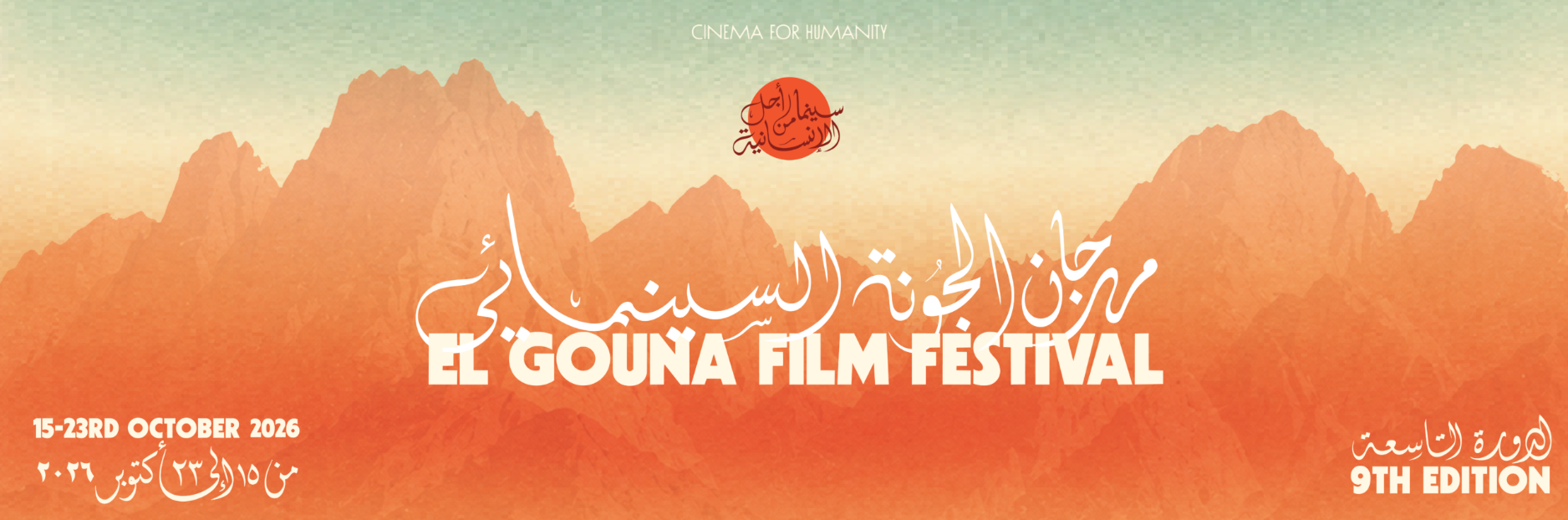
The ninth edition, held from 15 to 23 October 2026, brought together international productions, emerging directors and established figures from Egyptian and Arab cinema. Under the theme “Cinema for Humanity: Archiving Narratives”, the festival explored cinema’s ability to preserve personal experiences, collective memories and stories that might otherwise disappear.
With 77 films across its different sections, El Gouna offered a programme combining fiction, documentaries and short films, while strengthening its commitment to supporting filmmakers from the Middle East and North Africa.
The 2026 edition was particularly significant for Egyptian cinema, which celebrated the festival’s highest award, and for Palestinian filmmaking, whose presence extended beyond the competitive programme.
Safe Exit Wins the Golden Star
The festival’s most prestigious award, the El Gouna Golden Star for Best Narrative Feature, went to Safe Exit, directed by Egyptian filmmaker Mohamed Hammad.
Its victory represented an important moment for the host country’s cinema, particularly at a festival that has consistently sought to connect Egyptian filmmakers with international audiences.
The jury was chaired by British director Joanna Hogg, whose films The Souvenir, The Souvenir Part II and The Eternal Daughter have established her as one of contemporary British cinema’s most distinctive voices.
The Silver Star went to Japanese filmmaker Yukiko Sode for All the Lovers in the Night, while Iranian director Ali Asgari received the Bronze Star for A Bit of Light.
The Best Arab Narrative Feature award recognised Yesterday the Eye Didn’t Sleep, directed by Rakan Mayasi, while Halima, by Moroccan filmmaker Yassine El Idrissi, received a Special Mention.
These results reflected the festival’s international ambitions without losing sight of its regional identity. Egyptian, Japanese, Iranian and Arab productions received recognition within the same competition, demonstrating the diversity of the programme.
The acting prizes also highlighted different cinematic traditions. Jovan Ginić won Best Actor for 3 Weeks After, directed by Miroslav Terzić, while Rakeen Saad received Best Actress for her performance in Boomah.
Main Awards – El Gouna Film Festival 2026
| Award | Winner |
|---|---|
| Golden Star – Best Narrative Feature | Safe Exit – Mohamed Hammad |
| Silver Star – Narrative Feature | All the Lovers in the Night – Yukiko Sode |
| Bronze Star – Narrative Feature | A Bit of Light – Ali Asgari |
| Best Arab Narrative Feature | Yesterday the Eye Didn’t Sleep – Rakan Mayasi |
| Best Actor | Jovan Ginić – 3 Weeks After |
| Best Actress | Rakeen Saad – Boomah |
| Golden Star – Best Documentary | Citizen Osama – Ahmed Hassouna |
| Best Arab Documentary | Citizen Osama – Ahmed Hassouna |
| Silver Star – Documentary | Whispers in May – Dongnan Chen |
| Bronze Star – Documentary | A War on Women – Raha Shirazi |
| Golden Star – Best Short Film | Stolen Memories – Anders Davidsen |
| Cinema for Humanity Audience Award | American Doctor – Poh Si Teng |
| El Gouna Green Star | Nuisance Bear – Gabriela Osio Vanden and Jack Weisman |
Palestinian Cinema Takes Centre Stage
One of the most meaningful results of the festival came from the documentary competition.
Citizen Osama, directed by Palestinian filmmaker Ahmed Hassouna, received both the Golden Star for Best Documentary and the Best Arab Documentary Award.
Winning both prizes gave the film particular prominence within an edition already concerned with memory, identity and the preservation of human experiences.
Palestinian cinema has increasingly attracted international attention through films that document the realities of occupation, displacement and everyday life under extraordinary circumstances. Yet the value of these productions extends beyond their immediate political context. They also preserve individual perspectives that can be lost when entire communities are discussed primarily through headlines and statistics.
El Gouna reinforced that commitment through its Window on Palestine, which returned for a fourth consecutive year.
The documentary awards also recognised Whispers in May, directed by Dongnan Chen, with the Silver Star, and A War on Women, by Raha Shirazi, with the Bronze Star.
Meanwhile, American Doctor, directed by Poh Si Teng, received the Cinema for Humanity Audience Award, highlighting the importance of films that connect humanitarian questions with personal experiences.
These selections demonstrated why documentary cinema remains such an essential part of the festival’s identity.
International Highlights and a Tribute to Mona Zaki
The festival opened with the French film All About Corinne, directed by Marc Fitoussi and starring Isabelle Huppert and Sandrine Kiberlain.
The film follows an actress whose professional ambitions have never quite matched the recognition she has received. Its exploration of artistic identity and the difficulties faced by women in the entertainment industry made it an appropriate opening selection for a festival interested in cinema’s relationship with society.
Beyond the competitions, the programme included several acclaimed international productions, among them Paweł Pawlikowski’s Fatherland, Cristian Mungiu’s Fjord and İlker Çatak’s Yellow Letters.
Their inclusion allowed Egyptian audiences to encounter films that had already attracted attention at major European festivals, while the competitive sections offered a platform to less internationally established directors.
The opening ceremony also honoured Egyptian actress Mona Zaki with the Creative Achievement Award, recognising her contribution to Egyptian and Arab cinema.
One of the country’s most celebrated contemporary performers, Zaki has built a career spanning film and television, portraying women whose personal experiences frequently reflect broader social changes.
The festival also paid tribute to veteran Egyptian lighting technician Hassan El-Sayed, acknowledging the contribution of film professionals whose work often remains invisible to audiences.
These recognitions provided an important reminder that cinema is a collective art form, dependent upon creative contributions extending far beyond the actors and directors who receive most of the attention.
CineGouna – Supporting the Future of Arab Cinema
El Gouna’s importance cannot be measured exclusively through its screenings and awards.
Its industry platform, CineGouna, has become an increasingly significant part of the festival, helping filmmakers develop projects, secure financing and establish relationships with producers and distributors.
The 2026 edition expanded these activities with CineGouna Series, a programme dedicated to Arabic-language television projects.
More than 125 projects were submitted, with six selected for development opportunities and meetings with industry professionals.
This initiative reflects an important reality of contemporary filmmaking: discovering new directors is only one part of supporting independent cinema. Helping them find the resources necessary to complete and distribute their work is equally essential.
For filmmakers working in countries where production funding and international distribution remain limited, such opportunities can make a considerable difference.
The festival also continued its educational activities through masterclasses and professional discussions involving figures such as Joanna Hogg, Yousry Nasrallah and Faouzi Bensaïdi.
A Growing Platform for Stories That Deserve to Travel
The ninth El Gouna Film Festival demonstrated the increasing importance of regional festivals within international cinema.
Its programme brought together recognised European filmmakers, emerging Asian directors, Egyptian productions and Palestinian documentaries, creating opportunities for films from different backgrounds to reach new audiences.
The victory of Safe Exit celebrated Egyptian filmmaking, while the double recognition of Citizen Osama reinforced the festival’s commitment to stories shaped by the experiences of the Arab world.
But perhaps El Gouna’s greatest contribution lies beyond its awards.
At a time when international film distribution remains dominated by a relatively small number of countries and production companies, festivals such as El Gouna provide essential spaces for filmmakers to develop their projects and connect with audiences.
The future of world cinema depends not only on discovering extraordinary films, but also on ensuring that filmmakers from different countries have the opportunity to make them.
That is what makes the El Gouna Film Festival worth following. Its greatest achievements may ultimately be the stories that begin their journeys here and reach audiences far beyond the shores of the Red Sea.
For the complete programme and official award winners, visit the El Gouna Film Festival website.
