
Few film festivals have an identity as recognisable as Sitges. Every October, this coastal town near Barcelona becomes a meeting point for horror enthusiasts, fantasy lovers, science-fiction filmmakers and audiences eager to discover cinema that challenges conventional storytelling. Zombies, supernatural creatures, dystopian futures and unsettling psychological dramas all find a home here, often alongside films that resist easy classification.
The 59th Sitges International Fantastic Film Festival of Catalonia, held in October 2026, continued that tradition, bringing together established filmmakers, emerging talents and some of the year’s most intriguing genre productions.
Sitges occupies a distinctive position on the international festival calendar. While Cannes, Venice and Berlin attract attention through prestigious competitions covering almost every cinematic genre, Sitges has built its reputation around a more specific ambition: celebrating the extraordinary possibilities of fantastic cinema.
And its appeal extends far beyond traditional horror. The festival has increasingly become a place where filmmakers explore contemporary anxieties through fantasy, science fiction, dark comedy and stories that blur the boundaries between reality and imagination.
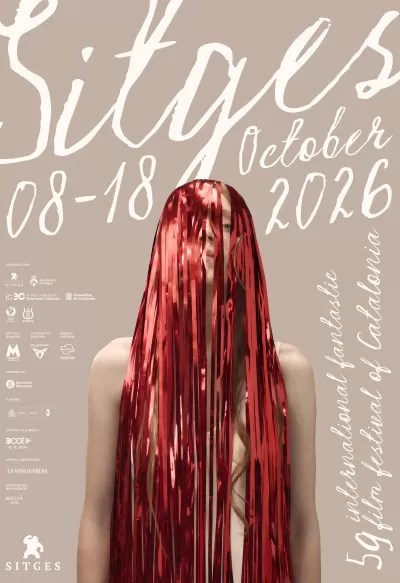
Main Awards – Sitges Film Festival 2026
| Award | Winner |
|---|---|
| Best Film | Sanguine – Marion Le Corroller |
| Special Jury Award | Drag – Greg Yagolnitzer and Raviv Ullman |
| Best Director | Joko Anwar – Ghost in the Cell |
| Best Actress | Jasmine Trinca – The Spiral |
| Best Actor | Benoît Magimel – The Birthday Party |
| Best Screenplay | Casper Kelly and Jamie King – Buddy |
| Best Cinematography | Raphaël Vandenbussche – Océano Titánico |
| Best Music | Mondo Boys – River |
| Best Special Effects | Hong Jeong-ho – Colony |
| Best New Director | Adrian Chiarella – Leviticus |
| Best Film – Noves Visions | Hen – Nico Scheepers |
| Best Animated Feature | We Are Aliens – Kohei Kadowaki |
| Audience Award – Best Film | Wildwood – Travis Knight |
From Found Alive to Wicker
The festival opened on 8 October with Found Alive, directed by Spanish filmmaker Carlota Pereda.
Following the international success of Piggy (2022), Pereda returned to Sitges with another exploration of fear, violence and psychological vulnerability.
Starring Chloë Grace Moretz, Found Alive follows a kidnapping survivor who becomes involved in an investigation to rescue another victim from a serial killer.
Its selection represented a milestone for the festival: the first time a Spanish female director had opened Sitges with a feature film.
The closing-night film was Wicker, directed by Alex Huston Fischer and Eleanor Wilson, and starring Olivia Colman, Alexander Skarsgård and Peter Dinklage.
The film’s unusual premise, involving a woman who commissions a husband made from wicker, offered a fitting conclusion to a festival devoted to stories that transform ordinary human desires into something strange and unsettling.
Between these two productions, the programme explored a remarkable range of cinematic traditions.
The 2026 edition presented 443 titles, including 286 feature films, 128 short films, television series and special screenings.
From supernatural horror and science fiction to experimental animation and psychological thrillers, Sitges once again demonstrated that fantastic cinema cannot be reduced to a single genre.
Peter Jackson, Carrie and the Legacy of Horror
One of the most memorable aspects of the 2026 edition was its celebration of filmmakers who helped shape the history of fantastic cinema.
Peter Jackson returned to Sitges more than three decades after presenting his cult zombie comedy Braindead (1992).
The director, who would later achieve worldwide recognition with The Lord of the Rings trilogy, introduced a new 4K restoration of the film, reconnecting audiences with the extravagant horror filmmaking that characterised his early career.
Jackson also participated in a special event dedicated to King Kong, alongside legendary special-effects artist Rick Baker.
The festival honoured several other major figures, including Danny DeVito, Kevin Bacon and Amy Irving, while directors Robert Eggers and Takashi Shimizu received Time Machine Awards.
Eggers, whose films include The Witch, The Lighthouse and Nosferatu, represents a generation of filmmakers who have brought a distinctive artistic sensibility to contemporary horror.
Shimizu, meanwhile, remains one of the defining figures of Japanese horror through his work on the Ju-on franchise.
The 2026 edition also celebrated the 50th anniversary of Brian De Palma’s Carrie (1976), a film that helped establish the psychological and emotional possibilities of modern horror.
The anniversary provided an opportunity to revisit a work whose themes of adolescent alienation, bullying and repression remain remarkably relevant.
Another important tribute marked the 30th anniversary of Alejandro Amenábar’s Thesis (1996), one of the most influential Spanish thrillers of its generation.
These celebrations demonstrated that Sitges is not only interested in discovering new films. It also plays an essential role in preserving and reconsidering the history of fantastic cinema.
Beyond Horror – Animation, Experimentation and International Discoveries
Although horror remains central to Sitges, the festival’s parallel sections offered a broader understanding of contemporary genre filmmaking.
The Noves Visions section, dedicated to unconventional and experimental cinema, awarded its Best Film prize to Hen, directed by Nico Scheepers.
The Anima’t competition recognised We Are Aliens, directed by Japanese filmmaker Kohei Kadowaki, as Best Animated Feature.
Animation has become an increasingly important part of fantastic cinema, offering filmmakers the freedom to create worlds, characters and visual experiences that would be difficult to reproduce through live action.
Meanwhile, the Méliès d’Or Award for Best Fantastic Feature Film went to Feels Like Home, directed by Gábor Holtai.
The Méliès d’Argent recognised The Spiral, directed by Paolo Strippoli, adding another distinction to a film already celebrated for Jasmine Trinca’s performance.
Audience preferences also produced some interesting results.
Wildwood, directed by Travis Knight, received the festival’s main Audience Award, while The Fox, Kung Fu Deadly and Blades of the Guardians: Wind Rises in the Desert were recognised in other sections.
These awards revealed the breadth of tastes represented among Sitges audiences, from animated fantasy to action cinema and unconventional thrillers.
A Festival That Continues to Grow
The 59th Sitges Film Festival concluded with encouraging attendance figures.
According to the organisers, attendance increased by 6% compared with 2025, while ticket revenue exceeded one million euros.
These results suggest that the festival’s combination of international premieres, cult cinema, filmmaker encounters and popular events continues to attract a dedicated audience.
Its distinctive atmosphere also remains an important part of its appeal. Sitges is one of the few major festivals where audiences attend screenings in elaborate costumes, celebrate horror icons and participate in events such as the traditional Zombie Walk.
That enthusiasm creates a relationship between filmmakers and spectators that differs considerably from the more formal atmosphere associated with many prestigious European festivals.
Fantastic Cinema Beyond the Familiar
The 2026 Sitges Film Festival demonstrated how diverse contemporary fantastic cinema has become.
The victory of Marion Le Corroller’s Sanguine highlighted an emerging filmmaking voice, while Joko Anwar’s Best Director award reinforced the international importance of Indonesian horror.
The presence of Peter Jackson, Robert Eggers, Takashi Shimizu and other influential figures connected different generations of genre filmmaking, while the festival’s experimental and animation sections encouraged audiences to look beyond familiar definitions of horror and fantasy.
Perhaps the most interesting aspect of Sitges is its ability to bring together films that might appear to have little in common.
A disturbing psychological drama, an extravagant zombie comedy, a Japanese animated feature and an experimental science-fiction film can all find an enthusiastic audience within the same festival.
For Other Kind of Movies, this is precisely what makes Sitges worth following.
Fantastic cinema is not simply about escaping reality. At its best, it offers unexpected ways of confronting the fears, desires and contradictions that shape our lives.
And few festivals celebrate that possibility with as much enthusiasm as Sitges.
For the complete programme and official award winners, visit the Sitges Film Festival website.
