
Mexico has produced some of the most internationally celebrated filmmakers of the past three decades, from Alfonso Cuarón and Guillermo del Toro to Alejandro González Iñárritu. Yet beyond these familiar names lies an extraordinarily diverse national cinema, shaped by emerging directors, independent productions and stories that rarely receive the same international exposure.
Since its foundation in 2003, the Morelia International Film Festival has played an essential role in bringing these films to wider audiences. Located in the historic city of Morelia, in the Mexican state of Michoacán, the festival has become one of the country’s most important platforms for discovering new cinematic talent.
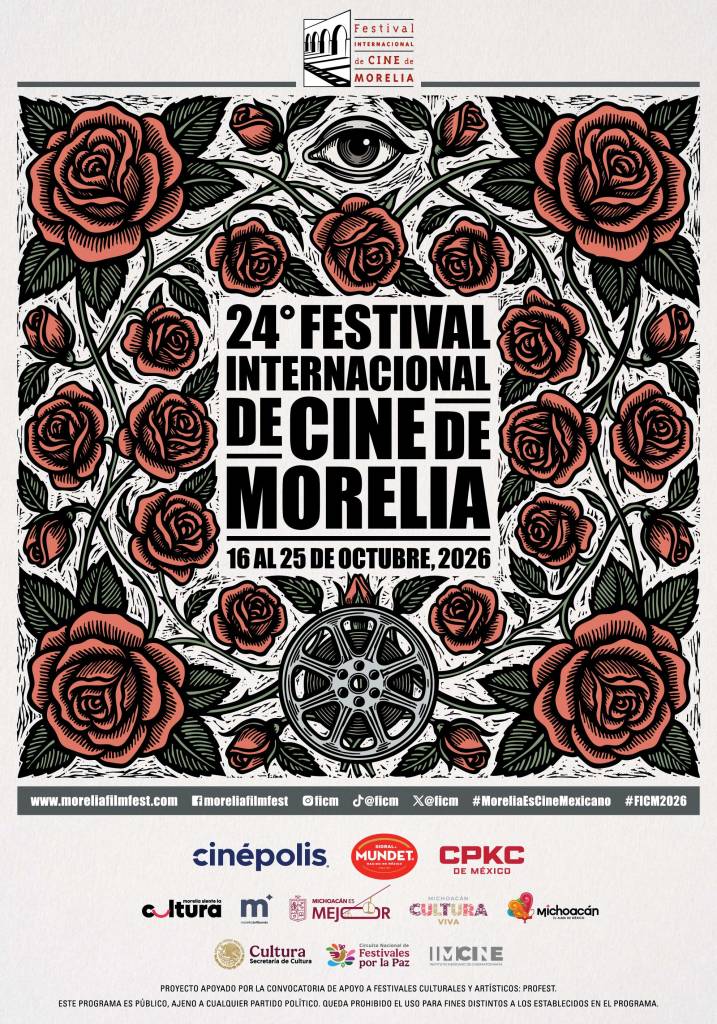
The 24th edition, held from 16 to 25 October 2026, continued that mission with 96 Mexican films in competition, alongside international premieres, special screenings and appearances by prominent filmmakers.
This year’s festival was particularly notable for its celebration of emerging Mexican voices, with Bruno Santamaría Razo’s 6 meses en el edificio rosa con azul emerging as the major winner.
6 meses en el edificio rosa con azul Wins Best Mexican Feature
The festival’s highest honour, the Ojo for Best Mexican Feature Film, went to 6 meses en el edificio rosa con azul, directed by Bruno Santamaría Razo.
Set in Mexico City in 1996, the film follows eleven-year-old Bruno, whose birthday coincides with his growing awareness of his feelings for his best friend.
Through this intimate coming-of-age story, Santamaría explores childhood, affection and the difficulties of understanding emotions that do not always fit the expectations imposed by family and society.
Its victory was particularly significant because the film also received the Audience Award for Best Mexican Feature, demonstrating its ability to connect with both the jury and festivalgoers.
The double recognition placed Santamaría among the most celebrated filmmakers of the 2026 edition.
The competition also highlighted Nicolás Pereda, who received the Best Director Award for Lo demás es ruido.
Pereda has developed a distinctive career within Mexican independent cinema, frequently exploring the boundaries between fiction and documentary, performance and everyday experience. His films often challenge conventional narrative structures, inviting audiences to question the relationship between cinematic representation and reality.
Lo demás es ruido received further recognition when Teresita Sánchez won Best Actress, making it another of the festival’s most successful productions.
The Best Actor Award went to Sam Louwyck for his performance in Salón de belleza, directed by Nathalia Acevedo.
Meanwhile, Joaquín Ruano received the Best Screenplay Award for Nosotros, and Gökhan Tiryaki won Best Cinematography for El jardín que soñamos, directed by Joaquín del Paso.
The latter film also received a Special Mention, while Fernanda Tovar was recognised with the Casa Wabi-Escine Award for her debut feature, Chicas tristes.
Together, these results reflected the diversity of contemporary Mexican filmmaking, from intimate personal dramas to more experimental cinematic approaches.
Main Awards – Morelia International Film Festival 2026
| Award | Winner |
|---|---|
| Best Mexican Feature Film – Ojo | 6 meses en el edificio rosa con azul – Bruno Santamaría Razo |
| Best Director – Mexican Fiction Feature | Nicolás Pereda – Lo demás es ruido |
| Best Actress | Teresita Sánchez – Lo demás es ruido |
| Best Actor | Sam Louwyck – Salón de belleza |
| Best Screenplay | Joaquín Ruano – Nosotros |
| Best Cinematography | Gökhan Tiryaki – El jardín que soñamos |
| Best Mexican Documentary Feature | Forensita – Pablo Vaca |
| Best Mexican Fiction Short Film | Cuerda manual – Gustavo Obregón |
| Michoacán Section Award | Buenos días, buenas noches, buenas tardes – Adrián González-Camargo |
| Audience Award – Mexican Feature | 6 meses en el edificio rosa con azul – Bruno Santamaría Razo |
| Audience Award – Mexican Documentary | yātrā – Alejandro Rugama |
| Audience Award – International Feature | Naza – Yuval Abraham and Rachel Szor |
| Best First Feature – Casa Wabi-Escine Award | Fernanda Tovar – Chicas tristes |
Forensita and the Importance of Mexican Documentary Cinema
Documentary filmmaking has always occupied an important place at Morelia, providing a platform for filmmakers examining the country’s social, political and cultural realities.
In 2026, the Ojo for Best Mexican Documentary Feature went to Forensita, directed by Pablo Vaca.
Its victory highlighted the strength of a documentary competition that brought together films exploring different aspects of contemporary Mexican society.
The jury also awarded a Special Mention to Los mariachis perdidos, directed by Francisco Ohem, while the Audience Award went to yātrā, by Alejandro Rugama.
Another notable recognition came from the Association of Women in Film and Television in Mexico, which presented its Musa Award to Mi sangre es petróleo, directed by Vania Carolina Quevedo.
The organisation also gave a Special Mention to Hijas del bosque, by Otilia Portillo Padua.
These awards demonstrated the festival’s commitment to documentary filmmaking as an essential means of exploring Mexican identity and contemporary experiences.
Morelia’s documentary programme also benefits from its connection with Ambulante, the travelling documentary festival associated with filmmakers Gael García Bernal and Diego Luna.
The collaboration between the two organisations helps strengthen the visibility of Mexican nonfiction cinema and provides additional opportunities for documentary projects to reach audiences.
Guillermo del Toro, Alfonso Cuarón and International Guests
Although Morelia’s competitive programme focuses on Mexican productions, the festival also attracts internationally recognised filmmakers, creating opportunities for dialogue between established figures and emerging directors.
The 2026 edition opened with Campeón gabacho, directed by Jonás Cuarón, who attended the opening ceremony alongside producer Alfonso Cuarón.
One of the most anticipated events was a special screening of Pan’s Labyrinth (2006), celebrating the film’s twentieth anniversary in the presence of Guillermo del Toro.
Two decades after its release, Pan’s Labyrinth remains one of the most distinctive achievements of contemporary fantasy cinema. Its combination of historical violence, childhood imagination and political allegory continues to demonstrate how genre filmmaking can address complex human experiences.
The anniversary screening also offered an opportunity to celebrate a Mexican director whose work has influenced filmmakers around the world.
The international programme included James Gray, who presented Paper Tiger, and Mexican filmmaker Carlos Reygadas, who returned to Morelia with Heil Jupiter! and a special screening of Battle in Heaven.
Other guests included Gael García Bernal, presenting Hombre al agua, and Demián Bichir, who participated in screenings connected with Mujer santuario and Angelina Jolie’s Without Blood.
The festival also welcomed filmmakers such as Andrea Pallaoro, Beth de Araújo and Markus Schleinzer, reinforcing its connections with contemporary international cinema.
These appearances provided an interesting contrast between the festival’s two identities: a celebration of Mexican filmmaking and an international meeting point for cinema from different countries.
Supporting Emerging Filmmakers
One of Morelia’s most important contributions to Mexican cinema lies in its commitment to supporting filmmakers at the beginning of their careers.
The 2026 Official Selection included 96 productions, divided into four competitive sections: Mexican features, Mexican documentaries, Mexican short films and the Michoacán section.
Of these, 64 were short films, demonstrating the importance the festival places on emerging talent.
The selected filmmakers represented 17 Mexican states, while approximately 40% of the works were directed by women. Four productions were made by filmmakers from Indigenous communities.
These figures reflect an effort to broaden the representation of Mexican cinema beyond the country’s largest production centres.
The festival also continued its Impulso Morelia programme, which supports Mexican films in post-production by connecting their creators with international industry professionals.
Among the projects recognised in 2026 were Galerna, by Tatiana Huezo, and Toda el agua del mundo, by Diego del Río.
Huezo has established herself as one of the most compelling voices in contemporary Mexican cinema through works such as Prayers for the Stolen and The Echo, combining documentary observation with a profound interest in the experiences of women and communities affected by violence.
The festival’s support for developing projects is particularly important in an industry where access to financing and international distribution remains uneven.
Morelia also announced a partnership with Casa de México in Spain and Madrid’s ECAM film school, creating an opportunity for a selected filmmaker to pursue further professional training.
Such initiatives demonstrate that the festival’s contribution extends beyond recognising completed films. It also seeks to create the conditions in which future productions can be developed.
A Festival Rooted in Mexican Cinema
The Morelia International Film Festival has developed an identity that distinguishes it from many other major international festivals.
Its competitive programme remains devoted to Mexican cinema, allowing audiences and industry professionals to discover productions that might otherwise receive limited attention.
At the same time, its international screenings and visiting filmmakers create opportunities for Mexican directors to establish connections beyond their national industry.
The 2026 edition demonstrated the value of this approach.
The double victory of 6 meses en el edificio rosa con azul celebrated an intimate coming-of-age story, while the recognition of Nicolás Pereda, Teresita Sánchez and Pablo Vaca highlighted the diversity of filmmaking approaches represented in the competition.
The festival’s documentary and short-film sections also reinforced its role in discovering emerging talent, while its industry initiatives continued to support projects still in development.
Perhaps Morelia’s greatest strength is its understanding that the future of national cinema depends on more than a handful of internationally successful directors.
Mexico’s cinematic identity is also shaped by filmmakers working with smaller budgets, exploring regional experiences and telling stories that rarely reach commercial screens.
The Morelia International Film Festival reminds us that discovering a country’s cinema means looking beyond its most famous names and paying attention to the voices still waiting to be heard.
And with another generation of Mexican filmmakers receiving recognition in 2026, Morelia continues to provide one of the most important places to discover them.
For the complete programme and official award winners, visit the Morelia International Film Festival website.
