
For half a century, the São Paulo International Film Festival has offered Brazilian audiences a window into cinema from almost every corner of the world. Known locally as the Mostra Internacional de Cinema em São Paulo, it has developed a reputation for bringing together internationally celebrated filmmakers, independent productions and emerging directors whose work rarely reaches commercial cinemas.
Unlike festivals that concentrate primarily on premieres and industry prestige, São Paulo has always placed particular importance on the experience of discovering films. Its screenings take place across the city, transforming cinemas and cultural spaces into meeting points for audiences interested in stories, languages and cinematic traditions beyond the mainstream.
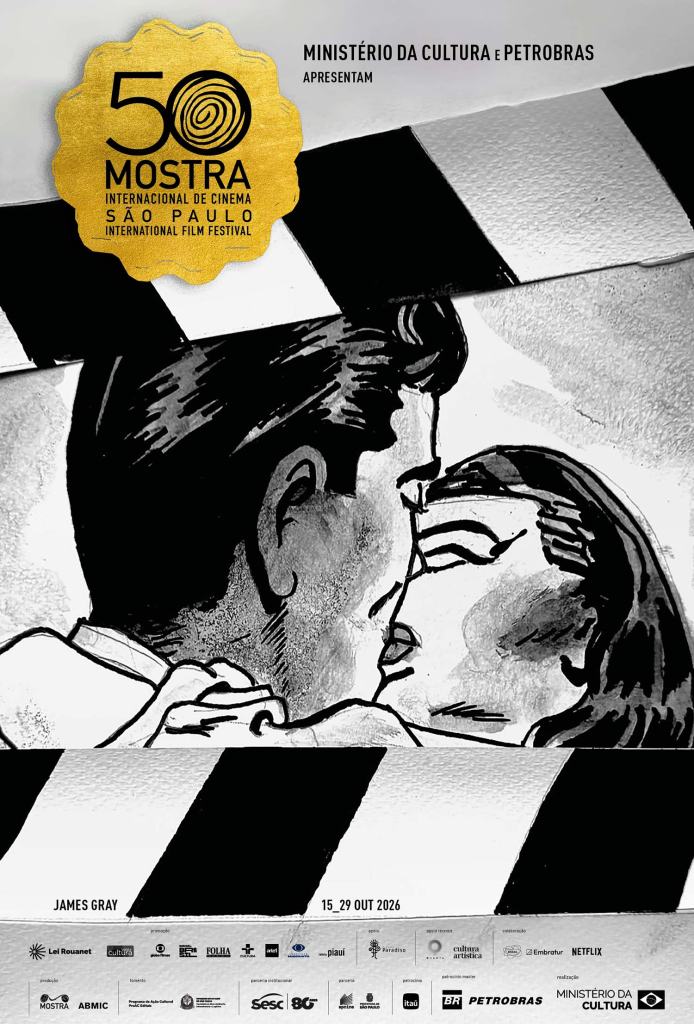
The 50th edition, held from 15 to 29 October 2026, marked a particularly important anniversary. With 394 titles from 90 countries, screened across 57 cinemas and cultural venues, the festival celebrated five decades of international filmmaking while maintaining its commitment to new voices.
This year’s awards highlighted the strength of Latin American cinema, with a Colombian production winning Best Fiction Film and a Mexican filmmaker receiving both the Best Director and International Critics’ awards.
Five Years, Four Months Wins Best Fiction Film
The festival’s most prestigious competitive distinction, the Bandeira Paulista Trophy for Best Fiction Film, went to Five Years, Four Months (Cinco Años, Cuatro Meses), directed by Colombian filmmakers Esteban Hoyos García and Juan Miguel Gelacio.
The film follows Martha, a middle-aged woman whose son disappeared during Colombia’s prolonged armed conflict. Her search for answers leads her into a landscape shaped by violence, grief and the difficult process of confronting a country’s unresolved past.
Through this personal story, the filmmakers explore the consequences of political violence on families who continue searching for loved ones long after the immediate events have disappeared from international headlines.
Its victory was especially meaningful at a festival whose international identity has consistently provided space for Latin American productions.
The jury, composed of Ali Asgari, Boots Riley, César Augusto Acevedo and Laís Bodanzky, selected the winners from the New Directors Competition, which combines audience participation with the assessment of an international jury.
The competition’s structure is particularly interesting: during the first week, audiences vote for their favourite films, and the jury subsequently considers the fifteen most popular titles.
This approach gives festivalgoers an unusually direct role in determining which emerging filmmakers receive official recognition.
The award for Best Director went to Mexican filmmaker Fernanda Tovar for Sad Girlz (Chicas Tristes), a drama exploring adolescent friendship and the emotional consequences of sexual violence.
Tovar’s film also received the Critics’ Award for Best International Film, making it one of the most celebrated productions of the edition.
These results placed two Colombian and Mexican stories at the centre of the festival’s anniversary celebrations, demonstrating the continuing vitality of Latin American filmmaking.
Main Awards – São Paulo International Film Festival 2026
| Award | Winner |
|---|---|
| Best Fiction Film – Jury Award | Five Years, Four Months – Esteban Hoyos García and Juan Miguel Gelacio |
| Best Documentary – Jury Award | The Hummingbird Paints Fragrant Songs – Matteo Norzi and Èlia Gasull Balada |
| Best Director | Fernanda Tovar – Sad Girlz |
| Special Jury Award | Edward Said: Between Worlds – Maiken Baird |
| Audience Award – Best Brazilian Fiction | Feito Pipa – Allan Deberton / 100 Days – Carlos Saldanha |
| Audience Award – Best Brazilian Documentary | Fernanda – Pedro Waddington |
| Audience Award – Best International Fiction | Soudain – Ryūsuke Hamaguchi |
| Audience Award – Best International Documentary | The Hummingbird Paints Fragrant Songs – Matteo Norzi and Èlia Gasull Balada |
| Critics’ Award – Best International Film | Sad Girlz – Fernanda Tovar |
| Critics’ Award – Best Brazilian Film | Little Tragedies – Daniel Nolasco |
| Netflix Award | Talismã – Thais Fujinaga |
| Projeto Paradiso Award | The French Teacher – Ricardo Alves Jr. |
| Prisma Queer – Best International Film | I Plant My Hand in the Garden – Boris Hadžija and Hoda Taheri |
| Prisma Queer – Best Brazilian Film | London – Victor Di Marco and Márcio Picoli |
Documentary Cinema – Indigenous Art, Memory and Palestinian Identity
The documentary competition produced another of the festival’s most significant results.
The Hummingbird Paints Fragrant Songs, directed by Matteo Norzi and Èlia Gasull Balada, received both the Jury Award for Best Documentary and the Audience Award for Best International Documentary.
The film focuses on Sara Flores, an Indigenous artist from Peru whose work connects artistic expression with cultural identity and the traditions of her community.
Its double victory highlighted the importance of documentaries that preserve cultural knowledge and offer visibility to artistic traditions that remain underrepresented in international cinema.
Another important recognition went to Edward Said: Between Worlds, directed by Maiken Baird, which received the Special Jury Award.
The documentary explores the life and intellectual legacy of Edward Said, the Palestinian-American scholar whose writings on identity, colonialism and cultural representation profoundly influenced contemporary thought.
By examining Said’s personal history alongside the broader experiences of Palestine, the film connects biography with questions of displacement, belonging and political memory.
The recognition of these two documentaries was particularly appropriate for a festival committed to international perspectives.
Both films explore how personal experiences and cultural expression can illuminate histories that extend far beyond the lives of their central subjects.
Brazilian documentary cinema also received recognition through Fernanda, directed by Pedro Waddington, which won the Audience Award for Best Brazilian Documentary.
The film offers an intimate portrait of Fernanda Montenegro, one of Brazil’s most celebrated actresses and an internationally recognised figure following her Oscar-nominated performance in Central Station (1998).
Together, these documentaries demonstrated the breadth of nonfiction filmmaking represented at the festival, from Indigenous artistic traditions to intellectual biography and the history of Brazilian cinema.
Ryūsuke Hamaguchi and the International Programme
Although the festival’s competitive awards focus on emerging directors, its broader programme brings together established international filmmakers and acclaimed productions from major festivals.
One of the most notable audience favourites was Soudain, directed by Japanese filmmaker Ryūsuke Hamaguchi, which received the Audience Award for Best International Fiction Film.
Set around a care home near Paris, the film explores the relationship between its director and a terminally ill Japanese playwright, examining the emotional connections that develop between people facing very different circumstances.
Hamaguchi has become one of the most internationally admired Japanese directors through films such as Drive My Car, Wheel of Fortune and Fantasy and Evil Does Not Exist.
His recognition in São Paulo demonstrated the festival’s ability to bring internationally celebrated filmmakers into direct contact with Brazilian audiences.
The programme also included Cristian Mungiu’s Fjord, winner of the 2026 Palme d’Or at Cannes, alongside Andrey Zvyagintsev’s Minotaur and Paweł Pawlikowski’s Fatherland.
Other selections included Valeska Grisebach’s The Dreamed Adventure and Sandra Wollner’s Everytime, both recognised at Cannes earlier in the year.
These films offered Brazilian audiences an opportunity to discover some of the most discussed works from the international festival circuit.
The edition concluded with a screening of You Can See Everything, directed by Nathan Fielder and Lance Oppenheim, following the awards ceremony at Teatro Cultura Artística.
Brazilian Cinema and the Audience Awards
Despite its international scope, the São Paulo festival remains an important showcase for Brazilian filmmaking.
The 2026 Audience Award for Best Brazilian Fiction Film was shared by Feito Pipa, directed by Allan Deberton, and 100 Days, directed by Carlos Saldanha.
The shared recognition demonstrated the diversity of Brazilian productions attracting public attention, while the Critics’ Award for Best Brazilian Film went to Little Tragedies, directed by Daniel Nolasco.
Nolasco has developed a distinctive filmmaking identity through works exploring sexuality, desire and queer experiences, often challenging conventional representations within Brazilian cinema.
The festival also continued to support emerging Brazilian productions through awards designed to improve their opportunities for distribution.
The Netflix Award went to Talismã, directed by Thais Fujinaga, while the Projeto Paradiso Award recognised The French Teacher, directed by Ricardo Alves Jr.
These distinctions are particularly important because independent films frequently face their greatest difficulties after production, when finding distributors and reaching audiences can become more challenging than completing the films themselves.
By connecting recognition with practical support, the festival contributes to the circulation of Brazilian cinema beyond its screenings.
Queer Cinema and New Perspectives
The 2026 edition also continued its commitment to LGBTQ+ filmmaking through the Prisma Queer Awards.
The prize for Best International Film went to I Plant My Hand in the Garden, directed by Boris Hadžija and Hoda Taheri.
The award for Best Brazilian Film recognised London, directed by Victor Di Marco and Márcio Picoli, while The Passion According to G.H.B., by Gustavo Vinagre and Viva Couto, received the Special Jury Award.
These distinctions reinforced the importance of providing visibility to filmmakers exploring identities, relationships and experiences that remain marginalised in many national film industries.
For a festival presenting hundreds of productions from around the world, dedicated recognition for queer cinema also helps audiences discover films that might otherwise be overlooked within such an extensive programme.
Celebrating Fifty Years of International Cinema
The festival’s 50th anniversary provided an opportunity to recognise filmmakers and industry figures whose careers have contributed to international cinema.
The Leon Cakoff Award, named after the festival’s founder, honoured James Gray, Paulo Branco and S. S. Rajamouli.
American filmmaker James Gray has developed a distinctive body of work through films such as The Immigrant, The Lost City of Z and Armageddon Time, frequently examining family relationships, social mobility and personal ambition.
Portuguese producer Paulo Branco has played an important role in European independent cinema, collaborating with filmmakers across different countries and artistic traditions.
Indian director S. S. Rajamouli, internationally recognised for RRR, represents a very different cinematic tradition, demonstrating the global appeal of large-scale Indian filmmaking.
The Humanity Award went to Marco Bechis, whose work has frequently explored political violence, historical memory and the experiences of people affected by authoritarianism.
These tributes reflected the festival’s international character and its willingness to celebrate filmmakers working across different genres, industries and cultural contexts.
Fifty Years of Discovering Other Kinds of Movies
The 50th São Paulo International Film Festival demonstrated why the event remains one of Latin America’s most important celebrations of world cinema.
The victory of Five Years, Four Months highlighted the strength of Colombian filmmaking, while Fernanda Tovar’s double recognition for Sad Girlz celebrated an emerging Mexican director.
The documentary awards brought attention to Indigenous artistic expression and Palestinian intellectual history, while the audience prizes reflected Brazilian enthusiasm for productions from different cinematic traditions.
Beyond its awards, the festival’s greatest achievement remains its ability to make international cinema accessible to a remarkably broad audience.
With hundreds of films presented across São Paulo, the Mostra creates opportunities for viewers to encounter unfamiliar countries, languages and perspectives through the shared experience of watching films.
Fifty years after its foundation, the São Paulo International Film Festival continues to demonstrate that the richness of cinema lies in its diversity.
And perhaps its greatest contribution is something that cannot be measured through awards or attendance figures: the possibility that a film made thousands of kilometres away, in a language we do not speak, might change the way we understand the world.
For the complete programme and official award winners, visit the São Paulo International Film Festival website.
