
Seventy years after its creation, the BFI London Film Festival remains one of Europe’s most exciting celebrations of international cinema. Unlike festivals defined primarily by their competition, London has developed a distinctive identity by combining major premieres, independent discoveries, experimental filmmaking and an unusually strong relationship with audiences.
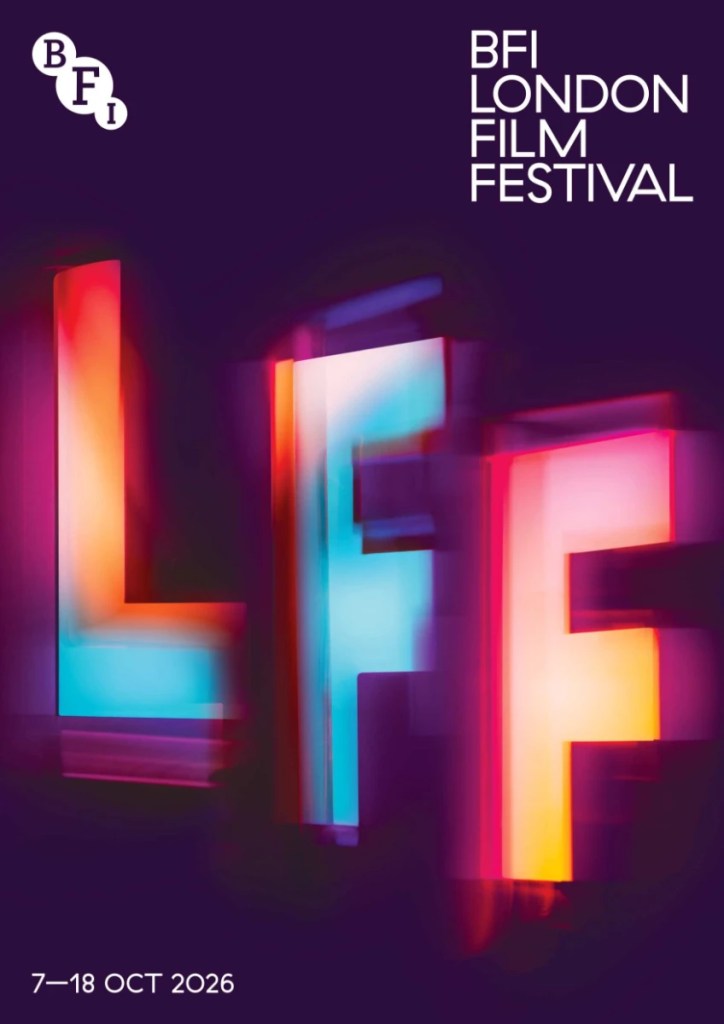
The 70th edition, held from 7 to 18 October 2026, brought together 251 films and other screen works from 88 countries, including 33 world premieres. Organised by the British Film Institute, the festival once again transformed London’s South Bank into a meeting point for filmmakers and cinema lovers, while selected screenings reached audiences in other parts of the United Kingdom.
This anniversary edition offered plenty of familiar names, including Pedro Almodóvar, Mike Leigh, Lee Chang-dong, Paweł Pawlikowski and James Gray. Yet the festival’s most interesting achievement was its ability to place those internationally established directors alongside emerging filmmakers whose work might otherwise struggle to reach a wider audience.
From Elsinore to The Debut
The festival opened with Elsinore, directed by Simon Stone, a biographical drama inspired by the life of Scottish actor Ian Charleson. Its selection provided a particularly appropriate beginning for an anniversary edition, connecting cinema with Britain’s theatrical tradition and the lives of artists whose influence extends beyond the screen.
The closing-night gala belonged to The Debut, directed by Jesse Eisenberg, a comedy exploring the world of community theatre. Its UK premiere brought the twelve-day celebration to an end with a film centred on creativity, personal relationships and the peculiar communities that form around artistic expression.
Between those two screenings, London presented an exceptionally varied selection of international cinema.
La Bola Negra, by Spanish directors Javier Calvo and Javier Ambrossi, arrived following its remarkable festival journey through Cannes, Toronto and San Sebastián. The film’s inclusion was particularly significant given its exploration of Federico García Lorca, homosexuality and the historical memory of Spain.
British cinema was represented by Mike Leigh’s Tender Loving Care, while Andrew Haigh presented A Long Winter, an adaptation of Colm Tóibín’s work. Danny Boyle’s Ink, meanwhile, explored the early newspaper career of Rupert Murdoch.
From Asia, Lee Chang-dong’s Possible Love attracted particular attention, marking another important appearance by the South Korean director of Burning and Poetry. Paweł Pawlikowski’s Fatherland, Pedro Almodóvar’s Bitter Christmas and James Gray’s Paper Tiger further demonstrated the international ambition of the programme.
London also offered room for less conventional projects. Animated films such as Wildwood and Ray Gunn, alongside documentaries and experimental works, reinforced the idea that cinematic innovation can emerge from many different forms of storytelling.
Imperium Wins Best Film
The festival’s highest competitive honour went to Imperium, directed by Ukrainian filmmaker Sergei Loznitsa.
Built from archival footage recorded by Italian cameramen in the Soviet Union during the early 1970s, Imperium offers an unusual perspective on a society that has frequently been represented through political ideology, official propaganda or retrospective historical accounts.
Loznitsa’s approach allows everyday images to reveal something more complex: a country filled with ordinary lives, cultural contradictions and social realities that existed beyond the dominant political narratives of the period.
The jury, chaired by documentary filmmaker Sam Pollard, recognised the film’s ability to reconstruct an unfamiliar portrait of Soviet life through archival material.
Its victory was particularly interesting because Imperium is not a conventional historical drama. The award recognised the creative possibilities of documentary filmmaking and the importance of revisiting historical images with new questions.
Main Awards – BFI London Film Festival 2026
| Award | Winner |
|---|---|
| Best Film | Imperium – Sergei Loznitsa |
| Sutherland Award – Best First Feature | 9 Temples to Heaven – Sompot Chidgasornpongse |
| Grierson Award – Best Documentary | Concrete Land – Asmahan Bkerat |
| Best Short Film | Aman – Rahul Roye |
| First Feature Special Mention | Masc – Bertil Nilsson |
| Documentary Special Mention | Queer Edward II – Theo Rollason |
| Short Film Special Mention | Daughters of the Late Colonel – Elizabeth Hobbs |
New Voices from Thailand, Jordan and Beyond
Beyond the main competition, the 2026 awards highlighted filmmakers whose work deserves greater international visibility.
The Sutherland Award for Best First Feature went to 9 Temples to Heaven, directed by Thailand’s Sompot Chidgasornpongse. His fiction debut explores family relationships, spirituality and the cycles of life and death through a contemplative cinematic approach. The jury praised its visual beauty and its ability to connect experiences across generations and cultural boundaries.
The film’s victory was particularly appropriate for a festival that has consistently supported emerging directors alongside established international figures.
British filmmaker Bertil Nilsson received a Special Mention for Masc, a debut exploring identity, precarious employment and the search for belonging.
In the documentary competition, Concrete Land, directed by Asmahan Bkerat, received the Grierson Award. The film follows a multigenerational family in Jordan confronting displacement and the possible disappearance of their cultural traditions.
Its observational approach impressed the jury, which emphasised the intimacy of Bkerat’s relationship with her subjects and the dignity with which their experiences are portrayed.
The documentary section also recognised Queer Edward II, directed by Theo Rollason, with a Special Mention. Constructed from archival material, the film revisits Derek Jarman’s Edward II and its relationship with the political struggles surrounding LGBTQ+ rights in Britain during the 1980s.
Finally, Aman, directed by Rahul Roye, received the Best Short Film Award. Its story follows a transgender man confronting unexpected questions about identity, masculinity and parenthood.
Together, these winners offered a fascinating contrast to the festival’s major galas. While established directors attracted international attention, the awards celebrated smaller productions exploring subjects such as displacement, identity, family and historical memory.
Seventy Years of Looking Beyond the Obvious
The BFI London Film Festival’s seventieth anniversary demonstrated how much the event has evolved since its beginnings in 1957.
Its 2026 programme brought together internationally recognised filmmakers, ambitious British productions, animation, documentaries and emerging voices from countries that rarely dominate mainstream distribution.
But the contrast between the gala selections and the award winners was perhaps the edition’s most interesting feature.
A festival that welcomed major names such as Almodóvar, Boyle, Leigh and Lee Chang-dong ultimately awarded its highest honours to an archival documentary about the Soviet Union, a contemplative Thai debut and a Jordanian documentary about displacement.
That combination reflects what international film festivals can achieve at their best: offering visibility to filmmakers who may not have the commercial resources or established reputations of their better-known contemporaries.
The 70th BFI London Film Festival was a celebration of cinema’s past, but its most exciting contribution may have been the attention it brought to cinema’s future.
For Other Kind of Movies, that is precisely what makes the festival worth following. The famous names may attract the headlines, but the most rewarding discoveries often come from the films we knew nothing about before the programme was announced.
For the full programme and official awards, visit the BFI London Film Festival website
